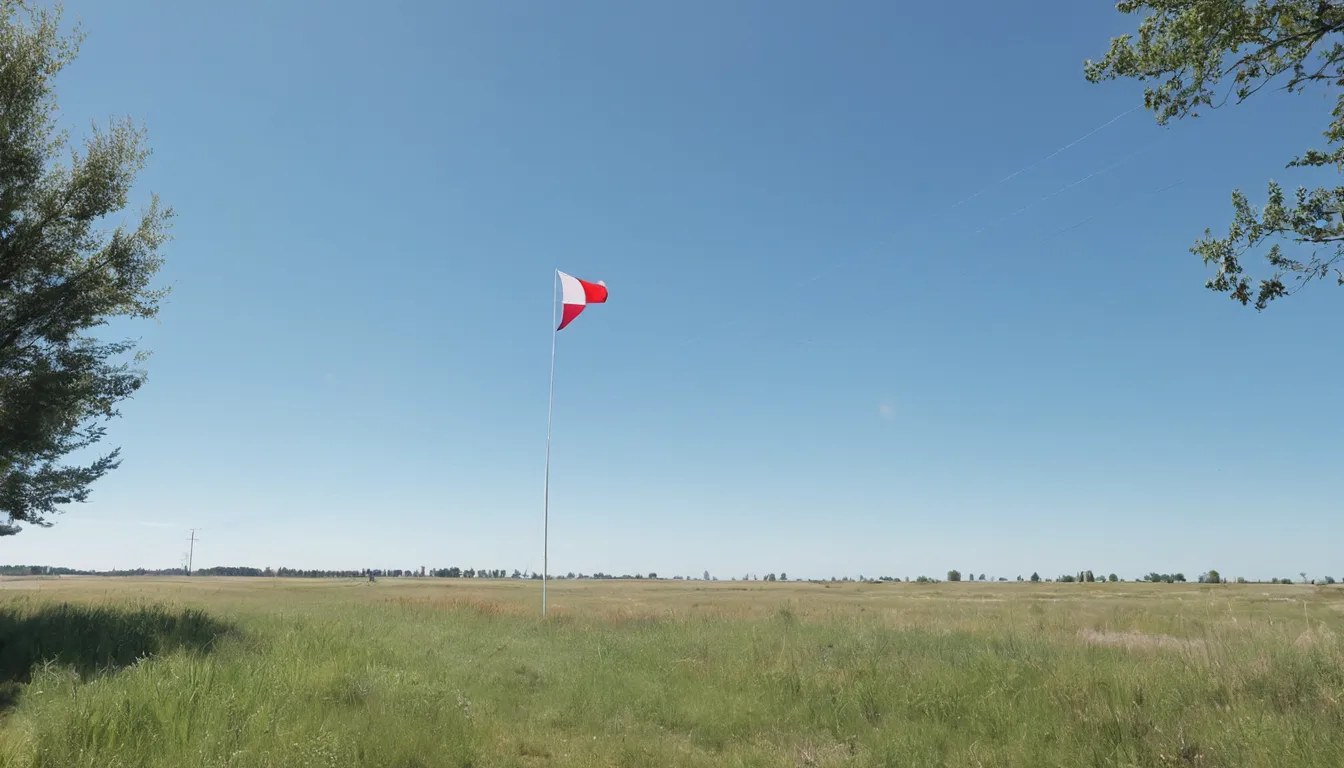
Look for space in every direction
A kite flies downwind of you, on a line that may be 100 feet long or more. You need room for the whole line plus the kite, and spare room in case the wind shifts or the line breaks. A useful rule of thumb is to look for empty ground stretching downwind at least as far as the line you plan to let out, and well beyond that to the sides.
Good places to fly often include:
- Large parks and playing fields, when no games are on.
- Wide sandy beaches, away from crowds and swimmers.
- Open hilltops and downs, with the wind blowing up the slope.
- Meadows and commons where kite flying is allowed.
What to stay away from
| Hazard | Why it matters |
|---|---|
| Power lines and substations | A line touching or near a power line can conduct electricity to you. Never fly anywhere near them. |
| Roads, railways and parking lots | A diving kite or a sagging line can startle or catch drivers, cyclists and riders. |
| Airports, airfields and helipads | Kites can be a hazard to aircraft, and aviation rules may limit how high you fly nearby. |
| Trees and buildings | Snagged kites, and turbulent air downwind of them. |
| Crowds, play areas and paths | Line can cut or burn skin, and a falling kite can hit someone. |
| Cliff edges and steep drops | It is easy to step backward while watching the kite. |
Check upwind as well as downwind
The ground upwind of you decides how clean the wind is. A wood or a row of houses on the upwind side fills the air with turbulence, even if the field in front of you is empty. Walk to the upwind end of the field and fly from there, so the kite sits in the smoother air over the open ground. The reading the wind guide explains why.
Check the local rules
Many parks, beaches and nature reserves allow kite flying, and some don't, or only allow it in certain areas or seasons. Some beaches restrict kites near nesting birds. Larger kites and traction kites often have their own rules. Look for signs at the entrance, check the landowner's or park authority's website, or ask staff.
Near airports, aviation rules apply. In the United States, the Federal Aviation Administration sets the rules for kites in the air; other countries have a national aviation authority that does the same. See the kite safety page for where to find them.
A quick site checklist
- Look up. Are there any power lines, cables or poles in any direction you could fly? If so, go somewhere else.
- Look downwind. Is there clear, empty ground at least as long as your line, with no road, rail line or parking lot?
- Look upwind. Are trees or buildings close enough to make the air rough?
- Look around. Are people, dogs or games close enough to walk under the line?
- Check the sky. Any dark clouds building, thunder or lightning means no flying today.
Can I fly a kite in my backyard?
Usually not well. Most yards are too small, and houses, trees and overhead lines make the wind rough and the risks high. A nearby park or field is a better bet.